Implementation of Next-Generation Firewalls for Modern Network Security

20 Mar 2026
Implementation of Next-Generation Firewalls for Modern Network Security
As the complexity of information technology infrastructure increases, cyber threats are also becoming more sophisticated and difficult to detect. Traditional network security systems, such as conventional firewalls, are no longer capable of providing adequate protection against modern attacks.
To address these challenges, the Next-Generation Firewall (NGFW) has emerged as a more comprehensive network security solution. This technology has been developed by various security vendors, one of which is Palo Alto Networks, known as a pioneer in modern firewall innovation.
What Is a Next-Generation Firewall (NGFW)?
A Next-Generation Firewall (NGFW) is a network security system that offers capabilities beyond those of traditional firewalls. NGFWs not only filter traffic based on IP addresses and ports, but are also capable of inspecting traffic down to the application and data content levels.
With this approach, NGFWs enable organizations to gain a deeper understanding of network activity and identify potential threats more accurately.
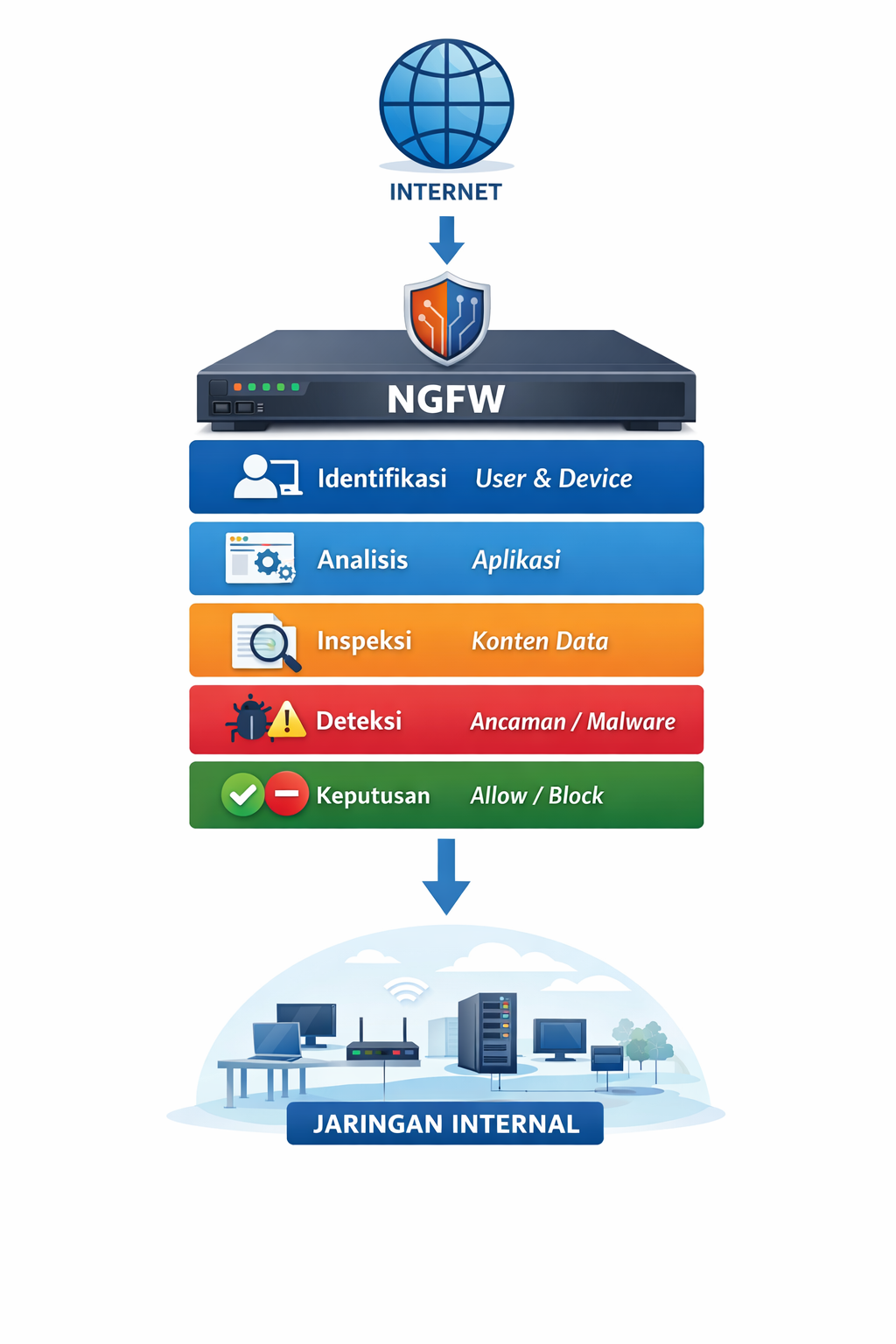
[Diagram of How an NGFW Works]
Figure caption:
The diagram illustrates the flow of internet traffic entering the NGFW system, then passing through several stages of analysis such as user identification, application inspection, content filtering, and threat detection before being either forwarded or blocked from accessing the internal network.
This approach enables more granular and context-aware security controls than traditional firewalls.
Key Features of the NGFW
-
Application Awareness: Identifies specific applications in network traffic.
-
User Identification: Security policies can be applied based on user identity.
-
Deep Packet Inspection (DPI): In-depth analysis of data content to detect hidden threats.
-
SSL/TLS Decryption: The ability to inspect encrypted traffic.
-
Intrusion Prevention System (IPS): Detects and prevents attacks in real time.
-
Advanced Threat Protection: Protection against advanced threats such as zero-day attacks.
-
Comparison with Traditional Firewalls
|
Aspect |
Traditional Firewalls
|
NGFW |
|
Analysis Methods |
IP & Port |
Apps, Users, Content |
|
Threat Detection |
Limited |
Real-time & Proactive |
|
Visibility |
Low |
High |
|
Flexibility |
Static |
Dynamic |
An NGFW offers a more adaptive security approach tailored to the needs of modern networks.
Benefits of NGFW Implementation
The implementation of NGFWs in an organization’s network offers a number of benefits, including:
-
Improved visibility into network activity
-
More comprehensive protection against modern threats
-
Efficiency in network security management
-
Support for cloud-based and hybrid infrastructure
Industry Recognition
As a leader in firewall technology, Palo Alto Networks has earned recognition from various industry research organizations.
Palo Alto Networks has been named a Leader in enterprise firewalls, achieving the highest score in the Current Offering category in The Forrester Wave™: Enterprise Firewall Solutions, Q4 2024.
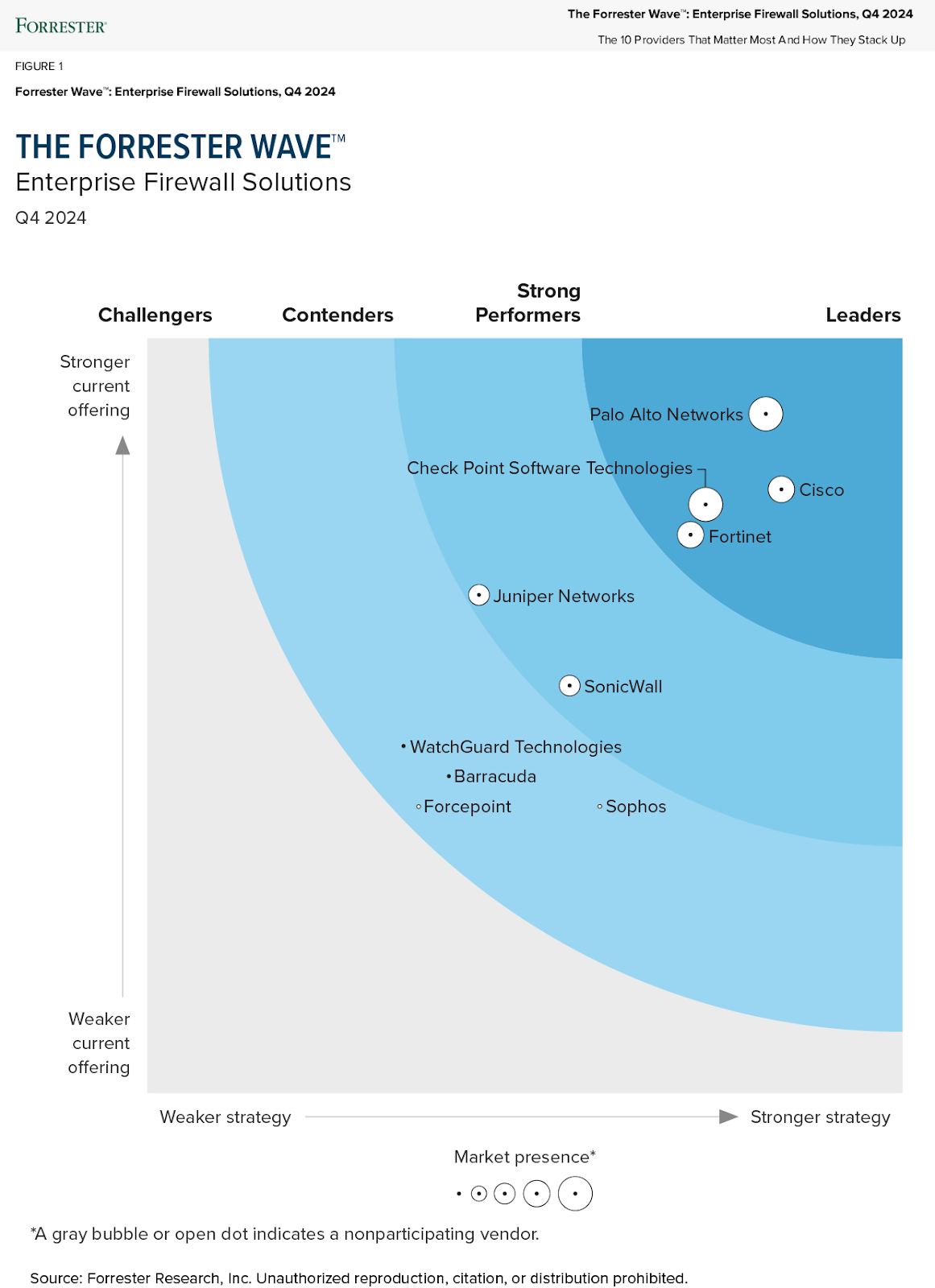
[Forrester Wave™ Recognition]
Conclusion
A Next-Generation Firewall (NGFW) is a network security solution designed to address the increasingly complex challenges of the digital age. With advanced analytics capabilities and integrated security features, an NGFW provides more effective protection than traditional firewalls.
Implementing an NGFW not only enhances security but also provides better visibility and control over all network activity, making it a critical component of a modern organization’s cybersecurity strategy.
Author: Ghea Devita
Marketing Communication PT Perkom Indah Murni